
Thread Cutting on Lathes: Techniques for Manufacturers
Thread cutting is one of the most important machining operations in modern manufacturing. From fasteners and shafts to precision mechanical elements, threaded parts play a critical role in multiple sectors such as construction, oil and gas, automotive, and heavy engineering. For manufacturers operating in competitive markets, mastering at thread cutting on lathe machines is crucial for achieving accuracy, efficiency, and consistency.
With the increasing need for high-quality components, many workshops depend on advanced machinery and guidance from experienced equipment suppliers to meet international standards. This blog examines core thread-cutting techniques, tooling considerations, and best practices for workshops seeking to improve productivity.
Understanding Thread Cutting on Lathes
Thread cutting is a machining method that creates helical threads on cylindrical workpieces, whether internal or external. This operation on a lathe is achieved by matching spindle speed with the controlled motion of the cutting tool through a lead screw or CNC control. There are two primary types of threads commonly produced:
- External threads, such as bolts and shafts
- Internal threads, such as nuts and threaded holes
The accuracy of a threading operation affects both the assembly of parts and their load-bearing capacity and product longevity.
The following are common techniques to create threaded fasteners:
1. Single-point threading
Among the various threading processes available, single-point threading is one of the most common techniques used on both traditional lathes and CNC lathes. The main feature of a single-point thread cutting process is that the cutting tool gradually reduces the thickness of the workpiece as it travels along it.
Single-point threading benefits include:
- Accuracy and excessive control
- Flexibility in producing custom items in low quantities
- Ability to produce various types of threads such as metric, imperial, and ACME
This method is common in all types of workshops where both manual and CNC machine tools are used due to its high level of adaptability.
2. Tapping for Internal Threads
Tapping uses a pre-formed tool to cut internal threads. While faster than single-point threading, tapping needs careful alignment and correct hole preparation.
Best practices include:
- Accurate drill sizing
- Proper lubrication
- Controlled spindle speed to prevent tap breakage
Many workshops source tapping tools and accessories from trusted suppliers, ensuring compatibility with their existing machines.
3. Die Threading for External Threads
The die threading is mostly minor dimensions and is mainly used in simple applications. The die threading is quicker than single-point cutting, as its speed in the production process is greater than what is achieved through single-point cutting; however, it does not provide the same accuracy as single-point cutting. Where the die threading is typically used:
- Light fabrication
- Maintenance
- Production in small batches
Setup and Tooling Considerations
Setup and Tooling are two of the most critical factors for achieving quality threads during the die threading process. When incorrect tooling or machine setups are used, the machine will produce poor-quality threads. Here’s a list of four critical considerations for ensuring high-quality thread generation:
- Select the right geometry of the tool for the desired thread profile
- Ensure high rigidity of holder tools to minimize the effects of vibration on the generated threads
- Ensure a consistent spindle rotation speed and feed rate
- Use the proper cutting fluid to ensure optimal surface finishes are generated on the finished threads
Companies and manufacturers that have purchased relatively new lathe machines in the UAE have typically witnessed an increase in the consistency of their finished threads as a result of using these modern machines, which are designed with enhanced rigidity and digital controls.
CNC vs Manual Thread Cutting
While manual lathes remain valuable for training and small-scale work, CNC lathes offer significant advantages for production environments.
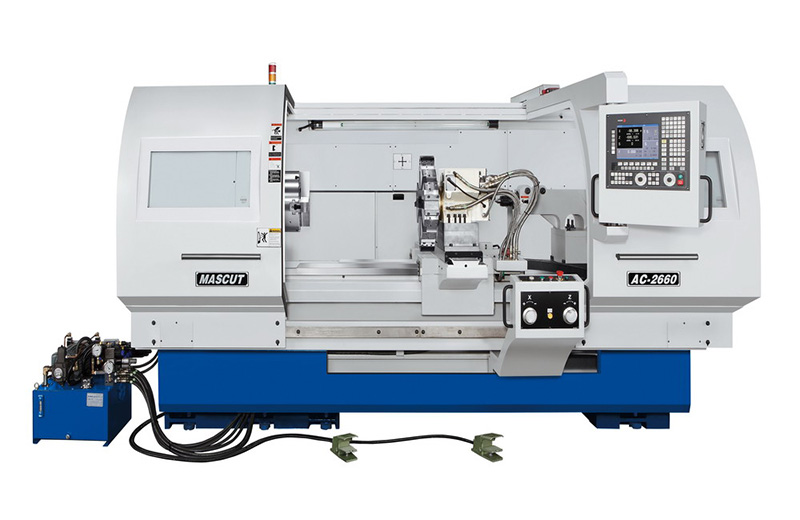
CNC lathes provide:
- Automated thread cycles
- Consistent repeatability
- Reduced setup time
- Improved safety
For growing manufacturers, consulting a reliable workshop equipment supplier can help identify the right balance between manual and CNC machinery based on production needs.
Common Thread Cutting Challenges
Despite its simplicity in principle, thread cutting presents several challenges:
- Tool wear causing inaccurate profiles
- Chatter and vibration leading to poor surface finish
- Incorrect pitch due to improper lead screw engagement
- Material deformation in softer metals
Regular machine maintenance, proper training, and quality tooling are essential to overcoming these issues.
Best Practices for Manufacturers
To achieve consistent threading results, workshops should follow these best practices:
- Always verify thread specifications before machining
- Use trial cuts to confirm pitch and depth
- Maintain sharp, high-quality cutting tools
- Apply appropriate cutting fluids
- Train operators on both manual and CNC threading techniques
Suppliers of industrial machinery and tooling play a critical role in supporting these practices by providing technical guidance alongside equipment.
The Role of Reliable Equipment Supply
With the rising manufacturing standards, reliable machinery and tools are crucial to provide the manufacturer with quality products. At Rockwood Workshop Machines, we understand that this is the need for the future. As one of the top suppliers of workshop equipment in the United Arab Emirates, we provide high-quality lathes from Rockwood and precision threading tools, along with an extensive aftercare support program to help ensure your success into the future.
Reliable suppliers help manufacturers:
- Upgrade production capabilities
- Reduce downtime
- Improve machining accuracy
- Stay competitive in regional and global markets
Conclusion
Thread cutting on lathes remains a core machining skill that directly impacts product quality and operational efficiency. By understanding the right techniques, investing in suitable equipment, and working with experienced suppliers, manufacturers can produce precise threads that meet demanding industrial requirements.
With continued advancements in lathe technology and growing access to modern lathe machines across the region, workshops are well-positioned to increase productivity while maintaining the highest standards of workmanship.
To read more blogs, click here: 5 Warning Signs Your Industrial Vacuum Is Losing Suction Power