Looking for a Cost-Effective Threading Solution? Portable Tapping Machines in UAE Deliver Results
Threading operations are a routine part of fabrication, maintenance, and manufacturing work. Yet many workshops still rely on manual tapping methods that consume valuable time and increase the risk of thread defects. When production schedules are tight and accuracy matters, the right equipment can make a noticeable difference.
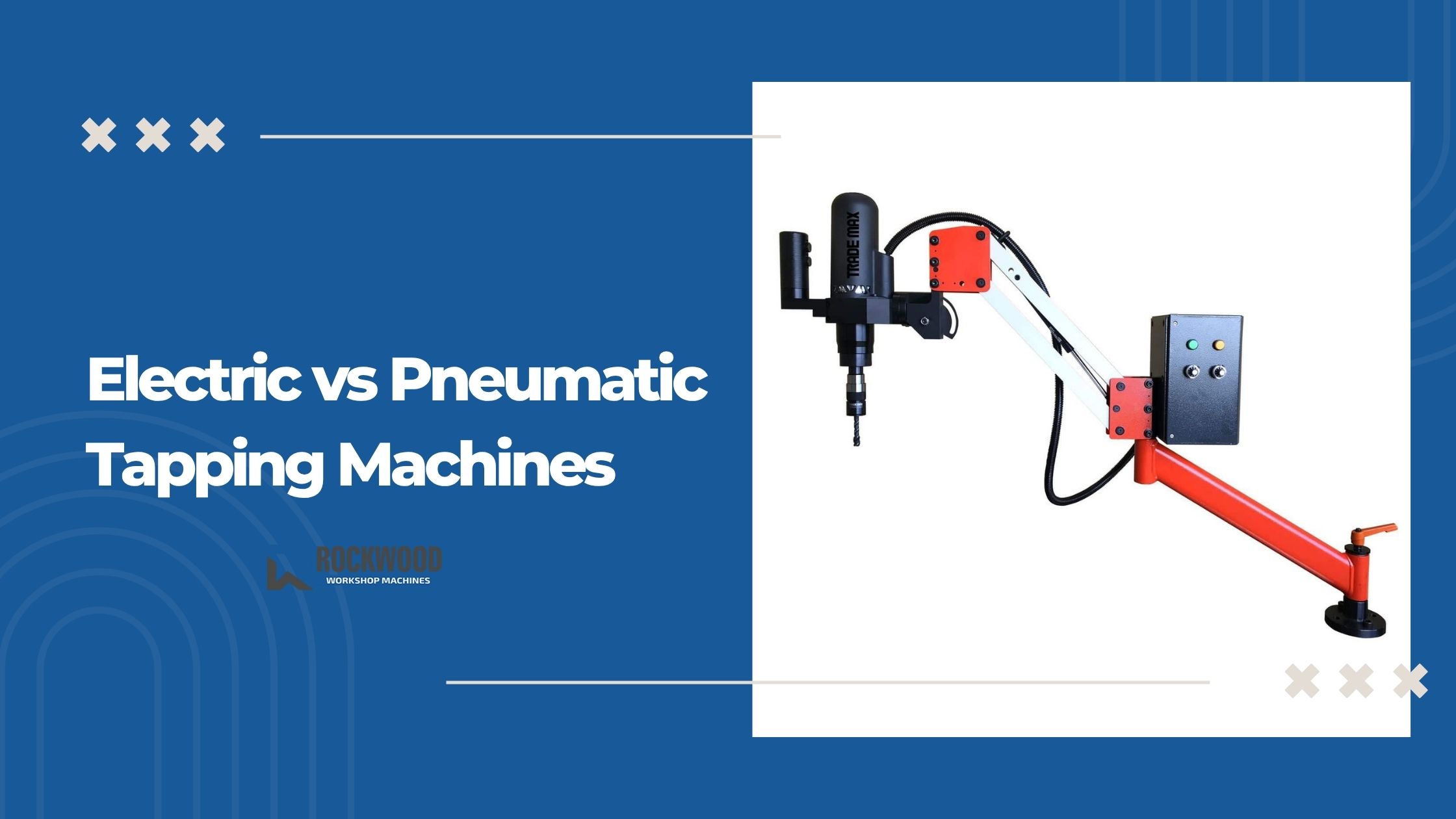
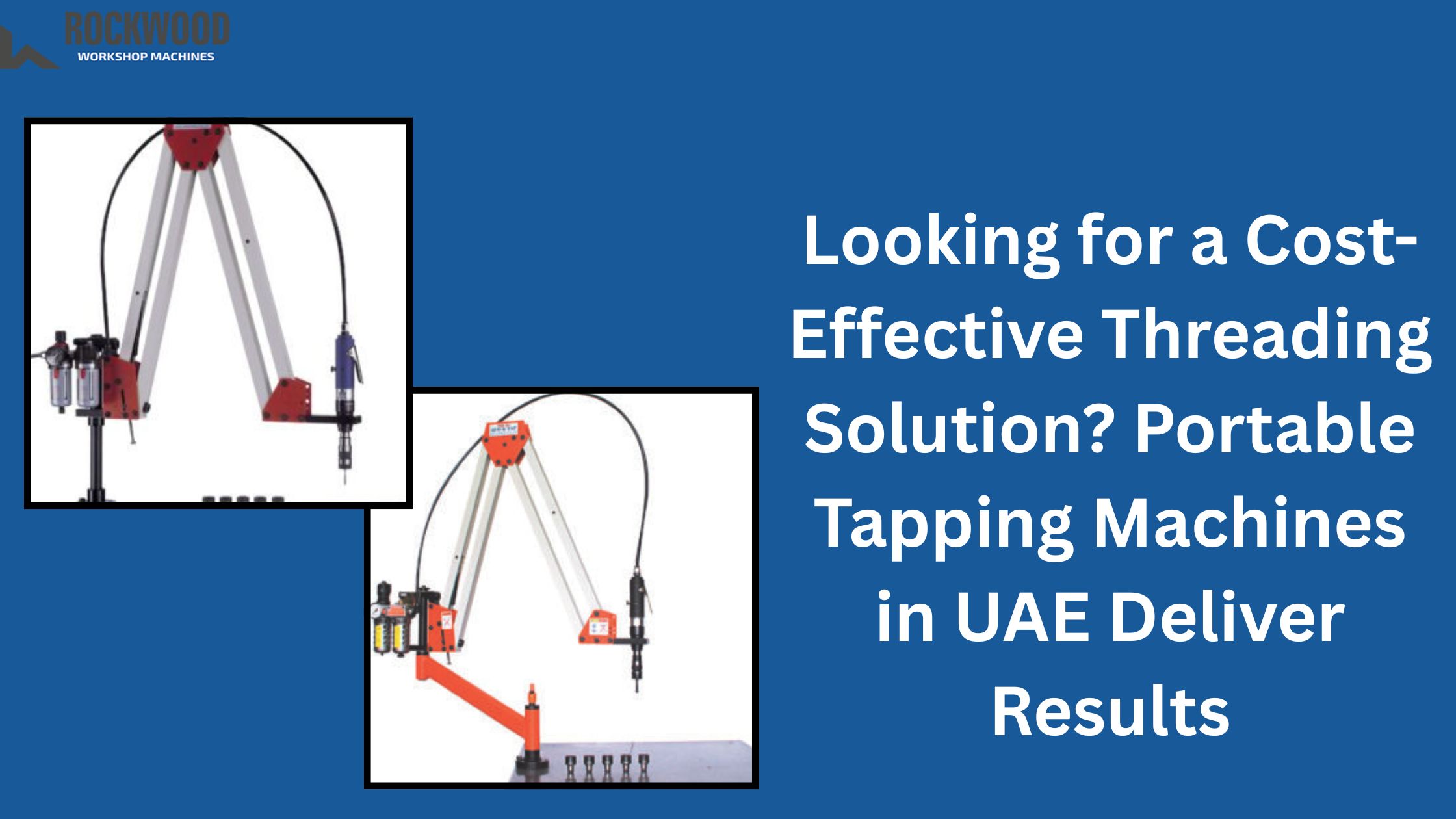
Portable tapping machines in UAE have become a practical choice for workshops that need reliable threading performance without investing in large, fixed machinery. Their flexibility, precision, and ease of use make them suitable for a wide range of industrial applications.
Why Thread Quality Matters in Workshop Operations
Poor thread quality creates problems that often appear later in the production cycle. Misaligned threads, inconsistent depths, and damaged components can lead to assembly issues, product rework, and additional labor costs.
For workshops handling fabricated steel structures, machinery parts, pipelines, and maintenance projects, thread accuracy directly affects the final product. Consistent threads improve fitment, reduce rejection rates, and help maintain quality standards across multiple jobs.
Portable tapping machines are engineered to provide consistent and precise results, enabling operators to achieve higher accuracy compared to manual methods.
A Practical Solution for Diverse Workshop Requirements
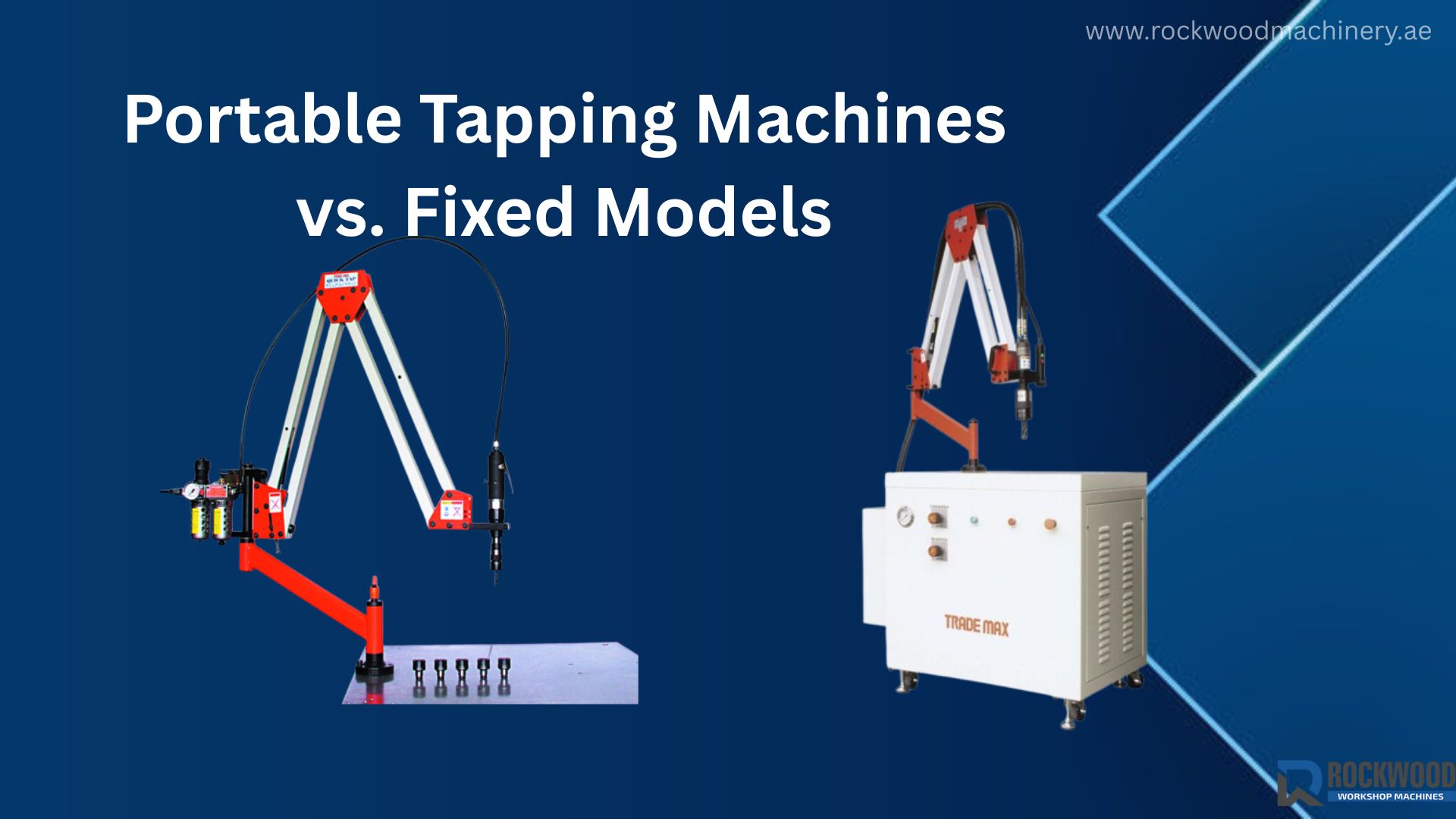
One reason many workshops choose portable tapping machines is their versatility. Unlike fixed tapping equipment that requires workpieces to be brought to the machine, portable systems can be moved directly to the job.
This advantage is particularly beneficial when collaborating with:
- Large fabricated structures
- Heavy steel components
- Industrial maintenance projects
- Construction equipment repairs
- On-site fabrication tasks
- Pipeline and pressure vessel work
Instead of spending time repositioning large components, operators can complete threading operations at the required location.
Reduced Labor Effort and Operator Fatigue
Manual tapping can be physically demanding, particularly when large thread sizes are involved. Repetitive operations increase operator fatigue and may affect consistency over long production shifts.
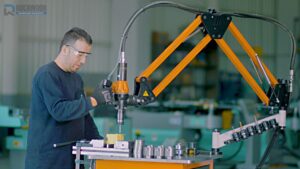
Portable tapping machines provide controlled torque and stable operation, reducing the physical effort required during threading. As a result, workshops can complete more work with less strain on personnel while maintaining consistent thread quality.
This improvement becomes particularly valuable for facilities that process a high volume of threaded components every day.
Faster Production Without Sacrificing Accuracy
Workshop productivity often depends on the speed of individual operations. Even small delays during machining and fabrication can affect overall project timelines.
Portable tapping machines help streamline threading processes through:
- Faster setup times
- Improved thread alignment
- Consistent tapping depth
- Reduced manual adjustments
- Lower risk of thread damage
The result is smoother workflow management and quicker project completion.
For workshops handling custom fabrication jobs, these efficiency gains can contribute to better resource utilization and improved delivery schedules.
Suitable for Multiple Materials
Modern workshops rarely work with a single material type. Fabricators often process carbon steel, stainless steel, aluminum, and other alloys depending on project requirements.
Quality portable tapping machines support a broad range of materials and thread sizes, allowing workshops to use the same equipment across different applications. This flexibility reduces the need for multiple specialized machines and helps control equipment costs.
A single machine capable of handling varied production demands offers strong value for small and medium-sized fabrication facilities.
Lower Rework Costs and Material Waste
Threading mistakes can become expensive. Damaged workpieces may require additional machining, repairs, or complete replacement.
By improving precision and maintaining stable tapping conditions, portable tapping machines help reduce common issues such as:
- Cross-threading
- Thread distortion
- Incorrect thread depth
- Broken taps
- Alignment errors
Fewer defects translate into lower material waste and reduced rework costs, helping workshops improve profitability over time.
Supporting Workshop Growth
As customer demands increase, workshops often face pressure to complete more projects without significantly increasing labor or floor space.
Portable tapping machines offer a scalable solution. They can be integrated into existing production environments without major facility modifications or extensive training requirements.
Their compact design also makes them suitable for workshops where available floor space is limited. Instead of investing in large stationary systems, businesses can expand threading capacity while maintaining operational flexibility.
Choosing the Right Portable Tapping Machine
Before selecting a machine, workshop managers should evaluate:
- Maximum tapping capacity
- Material compatibility
- Arm reach and working range
- Speed adjustment options
- Torque control features
- Ease of operation
- Service and spare parts availability
Choosing equipment that matches current production requirements while allowing room for future growth can provide long-term value.
Companies such as Rockwood Workshop supply portable tapping machines designed for industrial workshop environments, helping fabrication businesses improve efficiency, maintain thread accuracy, and support consistent production standards.
Conclusion
Workshops depend on accurate threading to maintain product quality and meet project deadlines. Manual methods often struggle to deliver the speed and consistency required in modern fabrication environments.
Portable tapping machines in UAE provide a practical and cost-effective solution for workshops seeking better thread quality, reduced labor effort, and improved production efficiency. With the ability to handle diverse applications and support long-term operational growth, they remain a valuable investment for fabrication, maintenance, and manufacturing facilities across the UAE.
To learn more, click: Is Your Hydraulic Ironworker Delivering Maximum Performance? Here’s How to Check