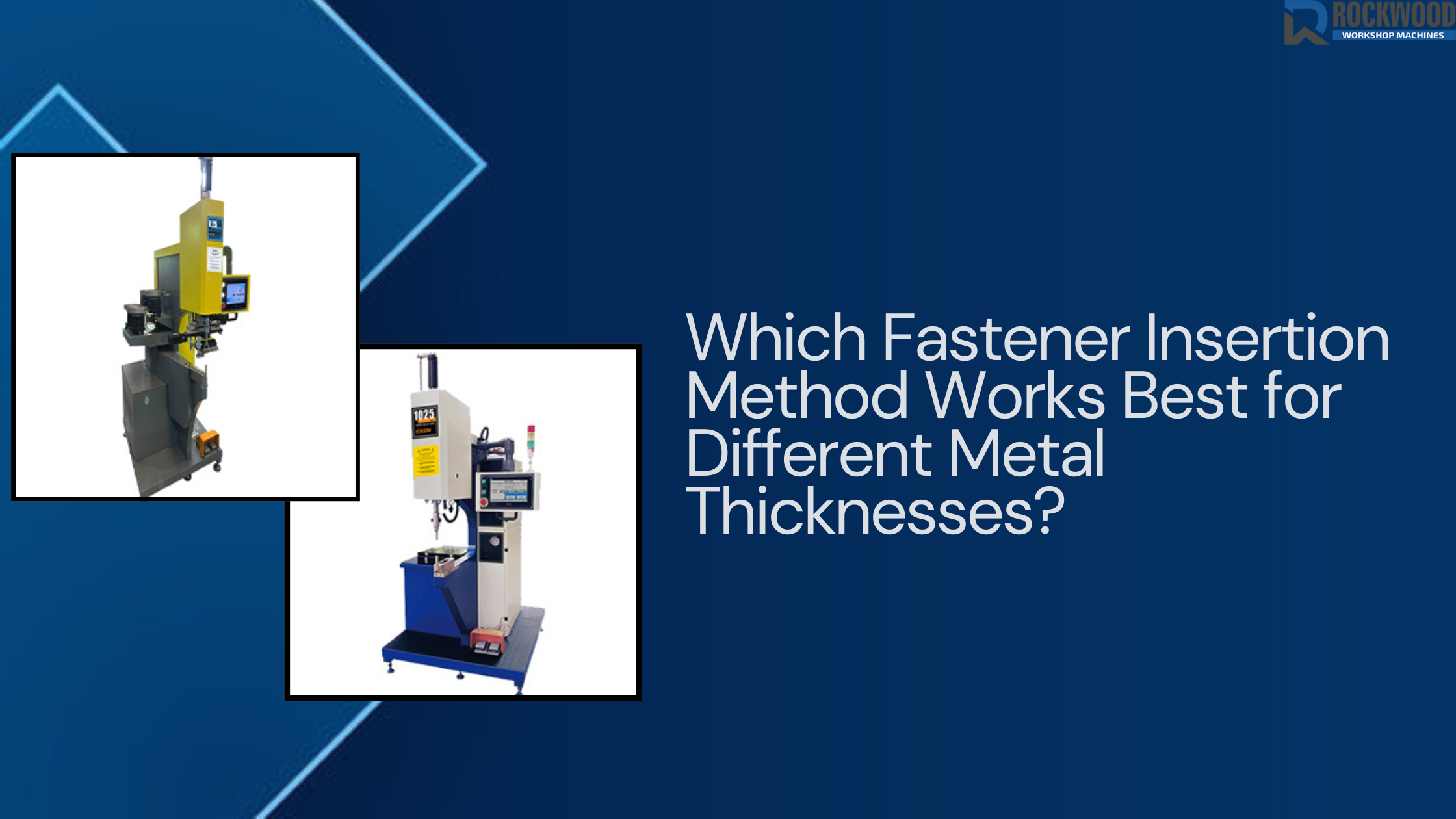
Which Fastener Insertion Method Works Best for Different Metal Thicknesses?
Choosing the appropriate method for fastener insertion depends on the thickness and type of metal sheet, as well as the required joint strength. A method that works well on a thin aluminium panel may not provide the same results on a thick steel plate. For manufacturers and fabrication workshops, selecting the correct process helps prevent sheet deformation, loose fasteners, and unnecessary rework.
Businesses looking for Fastener Insertion Machines in UAE should consider the material specifications and production requirements before investing in equipment. The appropriate machine enhances assembly precision while ensuring component quality.
Why Metal Thickness Matters in Fastener Insertion
Metal thickness affects how securely a fastener sits inside a sheet. Thin materials can bend or distort under excessive insertion force, while thicker sheets may require greater pressure or a different fastening technique.
The fastener’s design also plays an important role. Self-clinching fasteners, for example, use controlled pressure to displace metal around the fastener and create a secure mechanical connection. If the sheet is too thin, the fastener may not hold firmly. Excessive force can also damage the surrounding material.
Before selecting a method, manufacturers should check the minimum sheet thickness specified by the fastener manufacturer. Material hardness, hole dimensions, and the required load capacity also influence the final choice.
Best Fastener Insertion Methods for Different Metal Thicknesses
1. Thin Metal Sheets
Thin aluminium sheets and mild steel panels require careful handling during fastening. Excessive pressure can leave dents, distort flat surfaces, or damage nearby features.
Self-clinching fasteners are suitable for many thin-sheet applications when the material and fastener specifications match. They provide a permanent threaded attachment without requiring a separate nut on the reverse side.
Pneumatic or servo-controlled insertion equipment may be useful for applications that require consistent force. Operators should test the setup on sample pieces before starting production, particularly when working with delicate enclosures or electrical panels.
2. Medium-Thickness Metal Sheets
Medium-thickness sheets generally offer greater resistance to deformation, giving manufacturers more flexibility in their choice of fastening process. Self-clinching studs, nuts, and standoffs can work well when the material is compatible with the selected fastener.
Fastener Insertion Machines in UAE can help workshops maintain consistent insertion pressure across repeated jobs. For production lines handling different sheet sizes, adjustable force settings and suitable tooling can reduce setup errors.
Correct hole preparation remains essential. A hole that is too large may weaken the joint, while an undersized hole can prevent proper insertion or damage the fastener.
3. Thick Metal Plates
Thick steel plates often require a different approach because self-clinching fasteners have specific thickness limitations. Applying extra force alone will not guarantee a secure connection.
Depending on the design, manufacturers may choose threaded inserts, welded studs, tapped holes, or other fastening systems. The decision should consider plate thickness, access to both sides, expected loads, and heat exposure.
In fabrication workshops, hydraulic punching machines in the UAE create holes within the equipment’s capacity and tooling specifications. However, punching does not complete fastener installation. Hole tolerances must meet the fastening system’s requirements.
What to Look for in Fastener Insertion Equipment
Start machine selection with the production workload. A workshop assembling electrical enclosures has different requirements than one manufacturing heavy industrial cabinets.
Consider these factors before purchasing equipment:
- Insertion force: Ensure the machine delivers the required force without damaging the workpiece.
- Thickness compatibility: Confirm that the fastener suits the material thickness and hardness.
- Production volume: Repetitive assembly may benefit from automated feeding and controlled insertion cycles.
- Tooling flexibility: Adjustable tooling simplifies changeovers between fastener sizes.
- Quality control: Look for repeatable settings and practical inspection methods.
Workshops that cut, punch, and fasten may also need ironworker machines in the UAE. Depending on their configuration, these machines perform metalworking tasks such as punching and shearing. They serve a different purpose than dedicated fastener insertion presses and should not be treated as interchangeable.
When comparing workshop tools in UAE, check rated capacity, accessories, maintenance requirements, and after-sales support. Choosing equipment that aligns with daily workloads is often a better investment than selecting a machine solely for maximum capacity.
Common Mistakes to Avoid
One frequent mistake is selecting a fastener before confirming the sheet thickness. This can lead to weak joints or material damage. Another problem occurs when operators use excessive insertion pressure to compensate for incorrect hole dimensions or incompatible fasteners.
Manufacturers should also avoid assuming that every metal behaves the same way. Aluminium, stainless steel, and mild steel have different mechanical properties, so a setting that works for one material may not suit another.
Routine inspection helps identify loose fasteners, surface distortion, and inconsistent installation. Checking sample parts after a machine adjustment can prevent a larger batch of defective components.
Conclusion
The best fastener insertion method depends on the metal thickness, material properties, fastener design, and strength required for the finished assembly. Thin sheets need controlled insertion to prevent distortion, while thicker plates may require alternative fastening methods when self-clinching systems fall outside their specified limits.
Businesses looking for Fastener Insertion Machines in UAE can consider Rockwood Workshop for suitable workshop machinery and fabrication solutions. Selecting equipment based on machine capacity, fastener compatibility, and production requirements enhances assembly consistency and decreases unnecessary manufacturing costs. Accurate hole preparation and regular quality checks also contribute to reliable fastening results.
To read more blogs, click here: Is Your Industrial Vacuum Overheating? 5 Maintenance Red Flags to Watch