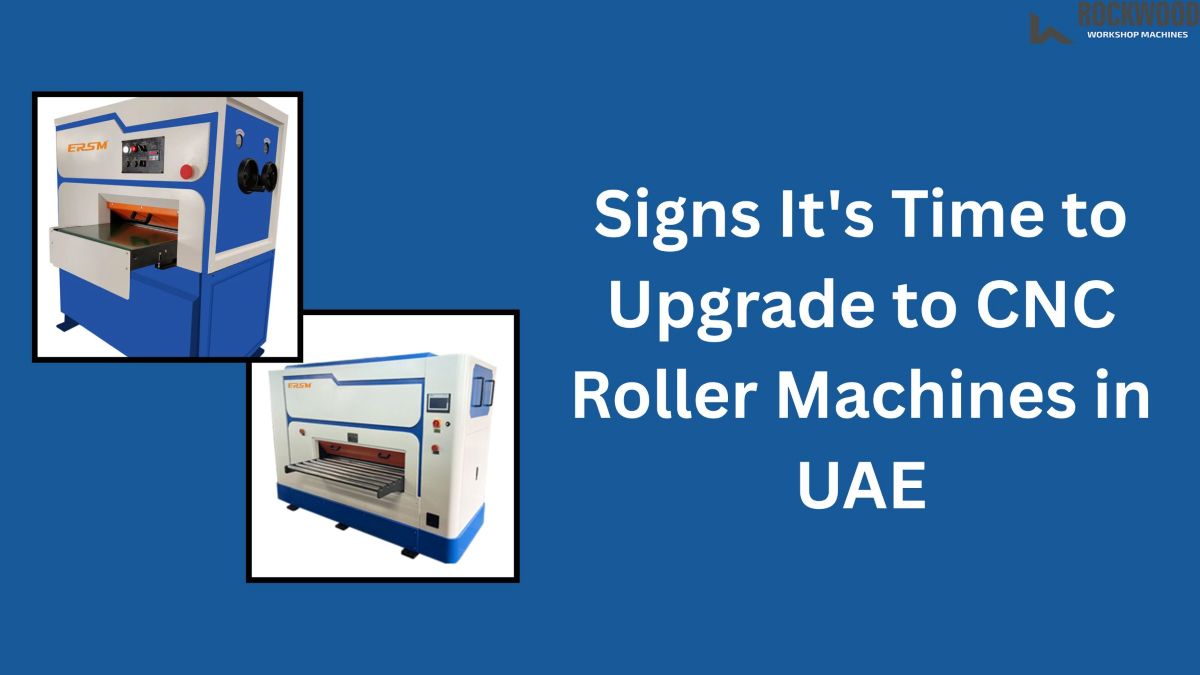
Signs It’s Time to Upgrade to CNC Roller Machines in UAE
Every manufacturing workshop reaches a stage where existing equipment begins to hold back production instead of supporting it. As customer expectations rise across the UAE, older roller machines can become a source of delays, higher maintenance costs, and inconsistent results. Although they may still be functional, they often lack the precision and efficiency required for modern fabrication work.
Upgrading to CNC roller machines in UAE enhances production accuracy, minimizes downtime, and enables manufacturers to manage larger workloads with increased confidence. Identifying the right time to replace older equipment can lead to better productivity, lower operating costs, and stronger long-term business performance.
Why Older Roller Machines Slow Down Production
Every machine experiences wear after years of continuous use. Rollers, bearings, drive systems, and control components gradually lose their original performance, making daily production less efficient.
Older machines also require more manual adjustments. Operators spend extra time setting the correct rolling position, checking measurements, and making corrections throughout the process. Even small delays become significant when multiple jobs are scheduled each day.
Another challenge is consistency. Manual adjustments can cause minor variations in finished parts, especially during large production runs. These discrepancies can lead to increased material waste and necessitate additional inspections before the products leave the workshop.
As maintenance requirements rise, managing production schedules becomes more challenging. Unexpected machine failures often result in delayed deliveries and higher operating costs.
Signs Your Roller Machine Needs an Upgrade
Many businesses continue to use older equipment because it remains operational. However, performance issues often appear long before a complete breakdown.
Some common warning signs include:
- Frequent machine stoppages
- Rising repair and maintenance expenses
- Difficulty producing accurate rolling dimensions
- Longer setup times between jobs
- Excess material waste
- Reduced production capacity
- Inconsistent product quality
- Limited compatibility with modern production software
If these problems occur regularly, upgrading the equipment may provide better long-term value than continuing with repeated repairs.
How CNC Roller Machines Improve Output Quality
Modern CNC roller machines rely on automated control systems to achieve precise and consistent rolling results. After the operating parameters are set, the machine repeats the same process with high accuracy, reducing manual intervention and delivering uniform quality throughout the production run.
This consistency produces components with better dimensional accuracy and smoother finishes. Large production batches can be completed with minimal variation between parts.
Digital controls also reduce the chance of operator errors. Stored programs eliminate the need to repeat complex machine settings every time a previous job returns.
Accurate rolling improves the fit of fabricated components during assembly. This reduces rework, lowers material waste, and helps manufacturers maintain quality standards expected by customers across industries such as structural steel fabrication, construction, oil and gas, and industrial manufacturing.
Production Problems CNC Roller Machines Can Solve
Production challenges usually develop over time, gradually affecting customer deadlines and increasing operational costs.
Modern CNC roller machines help solve many common manufacturing problems, including:
- Uneven rolling caused by inconsistent pressure
- Repeat errors during large production batches
- Long setup times for different projects
- High scrap rates due to inaccurate rolling
- Dependence on manual adjustments
- Difficulty processing different material sizes
- Lower production efficiency during busy periods
Automation keeps every production cycle consistent. Once the correct program has been selected, the machine continues producing identical components with very little variation.
This reliability allows manufacturers to complete more projects without sacrificing quality.
What to Check Before Upgrading Your Roller Machine
Selecting a new roller machine requires careful planning. The lowest purchase price does not always provide the best long-term value.
Begin by evaluating your current production requirements. Consider the types of materials processed, sheet thickness, production volume, and future business plans.
Other important factors include:
- Machine capacity
- CNC controller features
- Ease of programming
- Energy efficiency
- Availability of spare parts
- Local technical support
- Maintenance requirements
- Software compatibility with existing production systems
Operator training is another important consideration. A user-friendly CNC control system allows employees to learn new operations quickly while maintaining production efficiency.
Reliable after-sales support also helps reduce downtime by providing faster maintenance and technical assistance when required.
Selecting the Right CNC Roller Machine for Future Growth
Manufacturing requirements are evolving as customer expectations rise and new projects become increasingly demanding. Investing in equipment that supports future expansion gives businesses greater flexibility over the coming years.
Look for machines that can handle a wide range of material sizes and production requirements. Modern CNC systems with upgrade options allow businesses to adapt without replacing the entire machine.
Working with an experienced supplier is equally important. Professional installation, operator training, preventive maintenance, and technical support help maximize machine performance throughout its service life.
Choosing high-quality CNC Roller Machines in UAE is more than replacing older equipment. It is an investment that supports consistent production, higher product quality, improved efficiency, and long-term business growth.
Conclusion
Older roller machines often remain operational long after their productivity begins to decline. Frequent repairs, inconsistent results, longer setup times, and rising operating costs are clear signs that an upgrade should be considered.
Modern CNC roller machines offer increased precision, reliable performance, and improved production efficiency. Manufacturers seeking to enhance quality, minimize downtime, and prepare for future growth should consider upgrading to CNC technology as a valuable and practical investment.
To learn more, click: Is Your Hydraulic Punching Machine Slow? 6 Reasons Why and What to Do